
Nature and tides
See seals in Baie de Somme
Where to observe them, when to go and how to enjoy the moment without disturbing wildlife or ignoring the tides.
Seeing seals in Baie de Somme can be a highlight of the trip. The rule is simple: keep a proper distance. If an animal changes its behaviour because of us, we are already too close.
Observe without disturbing
Where can you see seals?
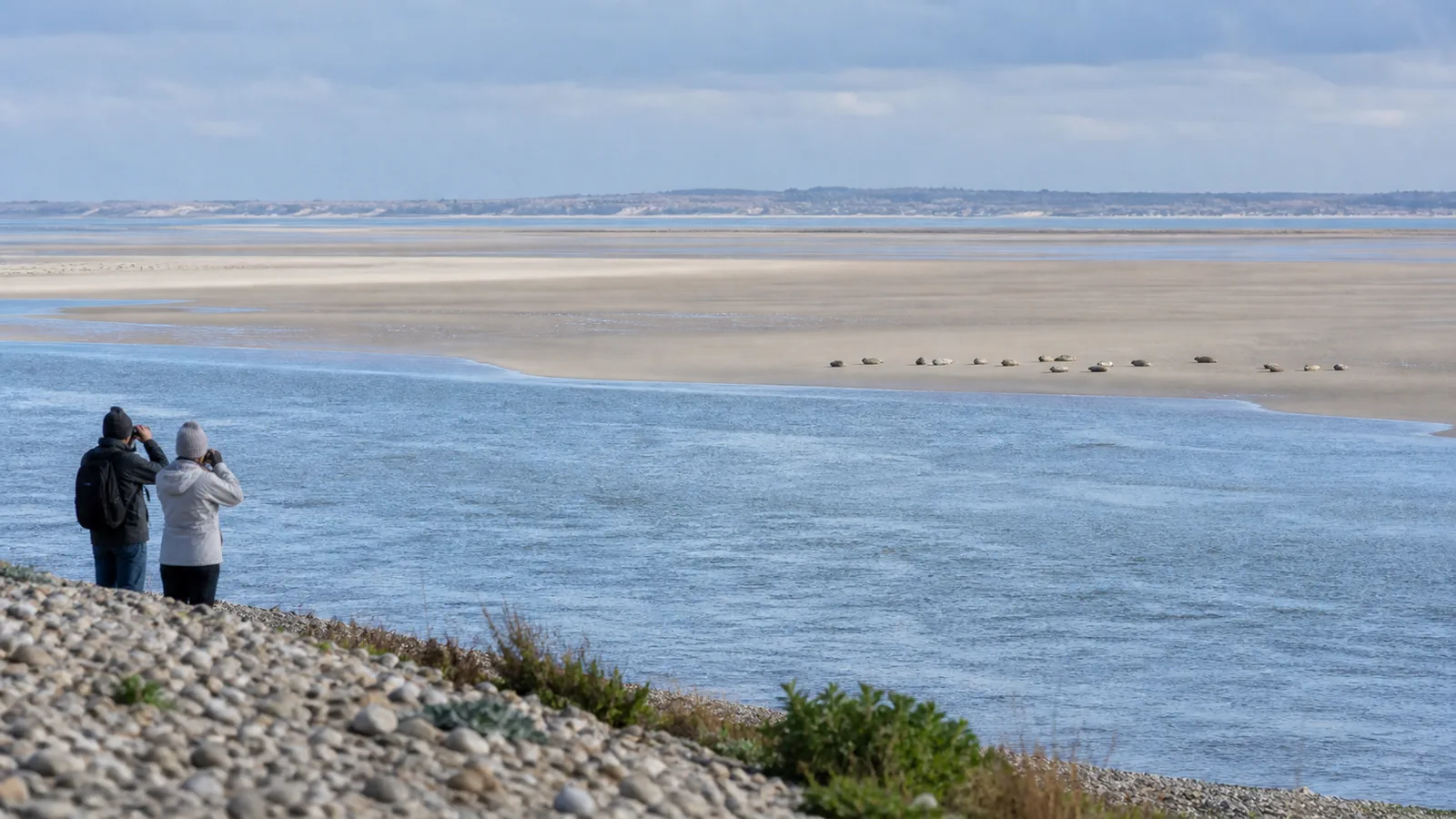
Le Hourdel is one of the places often mentioned for distant observation. From the point, depending on tides and conditions, you may see seals resting on sandbanks or in the water. They can be far away, and that is usually better for them.
Guided outings are available from different parts of the bay. They are often the best option if you want to understand the landscape, tides, species and safety rules. The bay is a moving natural area, not a fixed setting.
The role of tides
Seals rest on sandbanks when conditions allow it, so tide times matter. Before going, check with tourist offices, guides or specialist organisations. In the bay, improvising can quickly lead to wet feet and unsafe choices.
If you choose a guided outing, the guide will usually adapt the time and route. If you observe from land, bring binoculars and accept that the animals may remain small in the landscape. Respectful observation is closer to watching a natural scene than taking a close portrait.
Simple safety rules
- Keep a wide distance from the animals, even if they look calm.
- Never try to cross the bay alone to get closer.
- Do not make noise to make them move or raise their heads.
- Keep dogs away and follow local rules.
- Use binoculars rather than your feet. Binoculars have far less impact on wildlife.
Independent or guided outing?
For a first visit, a guided outing is often the most reassuring choice. It helps you understand tides, sensitive areas, safe distance and the natural history of the place. It is also easier with children or if you do not know the terrain.
Independent observation can work from accessible points, as long as you stay in authorised areas, do not venture into the bay and accept distant views. The goal is not to get close to seals, but to watch without disturbing them.
With children
With children, present the outing as a small mission: look for shapes on the sandbank, take turns with binoculars and explain why everyone stays far away. It is a simple way to talk about wildlife respect.
Bring suitable clothing, allow time to wait and have a plan B if the seals are not visible. Wildlife observation is never guaranteed.
Before you go
- Check tides and conditions before travelling.
- Choose a guided outing if you want to walk in the bay.
- Bring binoculars: they make a real difference.
- Keep your distance, even for a photo.
- Accept that observation depends on wildlife, not on your schedule.
What if you see nothing?
It can happen. Weather, visibility, tides and animal behaviour cannot be controlled. If the seals are not visible, the outing can still be worthwhile: Le Hourdel, sandbanks, birds and the light over the bay are already worth the trip.
Avoid building the whole day around one expectation. Plan a walk, a stop in Cayeux-sur-Mer or a visit to Saint-Valery as well. That way the day still works if the seals are not visible.